

The real work of removing a tree doesn’t end when the grinder stops spinning; it actually begins the moment the crew pulls out of your driveway. While that tripping hazard is finally gone, you’re likely staring at a mountain of debris and wondering what to do after stump grinding to make your yard look normal again. It’s a common frustration for homeowners in the Twin Cities who want a safe, level space for kids and pets to play without the fear of the ground sinking six months from now.
We understand that a pile of wood chips isn’t the finished look you were hoping for. This guide explains how to handle your yard restoration with professional results. You’ll learn how to manage excess mulch, balance your soil’s nitrogen levels, and decide if it’s actually safe to plant a new tree in the same spot. We’ll walk you through a step by step process to turn that woody crater into a lush, green patch of grass that blends perfectly with the rest of your landscape.
Key Takeaways
- Learn how to manage the massive volume of wood chips by choosing between repurposing them as mulch or total removal for a fresh start.
- Understand the nitrogen challenge and how to prevent yellowing grass caused by decomposing wood fibers beneath the surface.
- Discover exactly what to do after stump grinding to prevent future sinkholes through proper soil compaction and professional grading techniques.
- Identify the best methods for replanting the area using sod or seed to ensure the fastest visual recovery for your lawn.
- Spot the early signs of fungal growth and underground voids to keep your yard safe and level for your family and pets.
Managing the Debris: What to Do with Stump Grindings
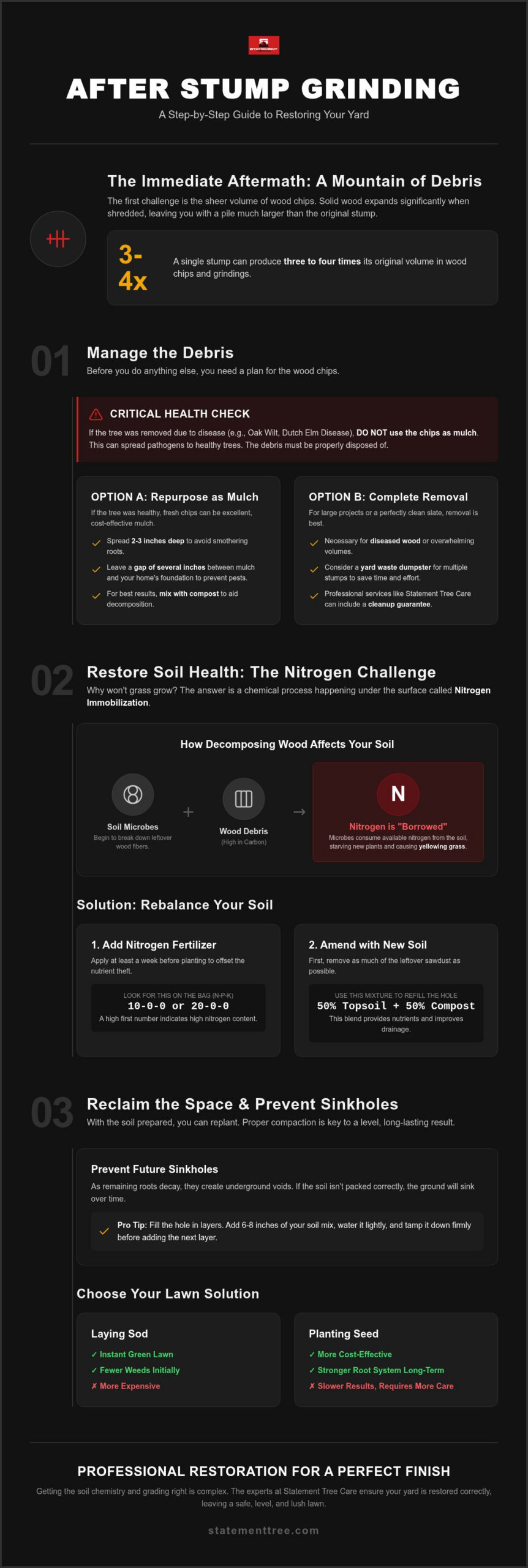
After the machinery shuts off, you’re often left with a pile that’s much larger than the tree itself. It’s a simple law of physics: solid wood expands significantly once it’s shredded into small pieces. Typically, a single stump produces three to four times its original volume in wood chips. This is usually the first hurdle when deciding what to do after stump grinding. You need a plan for that mountain of wood before it kills the grass underneath it.
Before you start shoveling, check the health of the original tree. If you removed an oak or elm due to diseases like Oak Wilt or Dutch Elm Disease, those chips shouldn’t stay in your yard. Using infected debris as mulch can spread pathogens to your healthy trees. If the wood was healthy, you can store the chips in a dry corner of your property to age. Letting them sit for a few months allows the high acidity to mellow out. This makes them much safer for your garden beds later on.
Using Wood Chips as Garden Mulch
Freshly ground chips make an excellent, cost-effective mulch for your flower beds and around the base of established shrubs. To get the best results, spread them no more than two or three inches deep. Any thicker and you risk smothering the roots by blocking oxygen and moisture from reaching the soil. Always leave a gap of several inches between the mulch and your home’s foundation. This prevents a “pest bridge” that allows termites or carpenter ants easy access to your siding. For faster results, mix the chips with a little compost to help them break down without depleting the soil’s nutrients.
Efficient Disposal Solutions for Large Projects
If you’ve cleared multiple trees or a large lot, the volume of debris can be overwhelming. Some Twin Cities municipalities have strict limits on how much yard waste they’ll take at the curb. For these bigger jobs, a dumpster for yard waste rental is often the most efficient choice. It keeps your driveway clear and saves you from dozens of trips to a local recycling center. At Statement Tree Care, we offer a cleanup guarantee with every job. We’ve spent 20 years helping neighbors in Chaska and Minnetonka manage these heavy lifting tasks so they can get back to enjoying their lawns.
Restoring Soil Health: The Nitrogen Challenge
When the grinding crew leaves, the soil underneath that pile of chips begins a complex chemical transformation. Many homeowners wonder why their grass won’t grow back, and the answer usually lies in a process called nitrogen immobilization. As soil microbes rush to break down the remaining underground roots and wood fibers, they need fuel to do their job. They essentially borrow nitrogen from the soil to power this decomposition. This temporary nutrient theft is a primary factor in what to do after stump grinding to ensure a healthy lawn.
Yellowing grass is the first sign that your soil is losing this battle. While the microbes are busy recycling the old tree, your new grass seeds are starving for the nutrients they need to thrive. This effect is even more pronounced if you’ve just removed a large evergreen. Pines and spruces often leave behind acidic soil that can hinder seed germination. Testing your soil pH in these specific spots helps you decide if you need to add lime to neutralize the area before you start planting.
Choosing the Right Fertilizer
To fix this imbalance, you need a fertilizer that feeds both the microbes and your new lawn. Look for a high-nitrogen starter fertilizer; you can identify these by checking the first number on the N-P-K bag. 10-0-0 or 20-0-0 ratios are often needed to offset carbon-heavy wood debris. You should apply this treatment at least a week before you plan to lay down sod or spread seed. This gives the soil time to stabilize so the new roots don’t have to compete for survival immediately.
Amending the Soil for Growth
Preparation is the secret to a level, green yard. Start by removing as much of the leftover “sawdust” as possible. If you leave a thick layer of wood dust, it creates a barrier that prevents water from reaching the deeper soil. Once the hole is clear, fill it with a 50/50 mix of high-quality topsoil and organic compost. This blend provides immediate nutrients and improves drainage. Proper packing is vital here; if the soil is too loose, you’ll end up with a “puddling” effect during the first heavy rain. If you’re feeling overwhelmed by the mess, the experts at Statement Tree Care offer a cleanup guarantee to make sure your restoration starts with a clean slate.
Getting the soil chemistry right takes patience. It’s much easier to spend an extra hour amending the dirt now than it is to dig up dead grass and start over in three months. By focusing on nitrogen levels and soil structure, you turn a former eyesore into the healthiest part of your yard.
Reclaiming the Space: Replanting and Landscaping
Once the soil is balanced, the focus shifts to the aesthetics. Most homeowners want that patch of bare dirt to disappear as quickly as possible. However, if you don’t pack the soil correctly, you’ll eventually face the “sinking hole” phenomenon. As those deep, underground roots continue to decay over several years, they create air pockets. If the topsoil isn’t compacted, it will drop into those voids, leaving a dangerous depression in your lawn. This is a critical part of knowing what to do after stump grinding to keep your yard safe for kids and pets.
For a fast recovery, sod is your best friend. It provides an instant green carpet and handles light foot traffic much sooner than seed. If you’re on a budget, high-quality grass seed works just as well, provided you have the patience to nurture it. Regardless of your choice, the goal is to create a seamless transition between the old stump site and the rest of your yard.
Growing Grass Over the Grinding Site
For neighbors in Minnetonka and Chaska, picking the right seed is essential for a perfect match. Kentucky Bluegrass is the gold standard for full-sun areas. Fine Fescue handles our shady Twin Cities corners much better. Use the “Step-and-Fill” method to prepare the ground. Add a layer of soil, step on it firmly to compress it, and repeat until the hole is slightly mounded above the surrounding grass. This accounts for future settling. Once seeded, keep the area moist with light watering twice a day for the first 21 days. If the seeds dry out during this critical window, they won’t survive.
Planting a New Tree Safely
It’s tempting to put a new sapling exactly where the old one stood. We recommend waiting at least one full growing season. The ground is still shifting. Knowing what to do after stump grinding involves understanding that remaining root architecture can be physically impossible for a new tree to penetrate. The safest bet is to plant your new tree three to five feet away from the original spot. This avoids the thickest part of the old stump. If you’re unsure which species will thrive in your specific soil conditions, consulting a local tree removal expert can prevent a costly mistake.
If you don’t want to wait for grass to grow, consider a raised garden bed. This creates an immediate focal point and avoids the soil issues entirely. By building up instead of digging down, you bypass the biological debt left by the old stump while adding instant curb appeal to your property.
Safety and Pests: Protecting Your Property
Safety doesn’t stop once the machine is loaded back onto the trailer. While the surface looks flat, a complex biological process is beginning underground. Decaying roots don’t disappear overnight; they rot slowly over five to ten years. This decay creates underground voids that can eventually collapse under the weight of a lawnmower or a person walking by. Understanding this long-term timeline is a vital part of what to do after stump grinding to protect your family and property from unexpected sinkholes.
If you notice mushrooms or shelf-like “conks” appearing near the old site, don’t ignore them. These are fruiting bodies of fungi feeding on the dead wood beneath your grass. Honey Fungus is particularly dangerous in our region. It doesn’t just eat dead roots; it can spread through the soil to attack healthy, living trees nearby. Keeping an eye on these growths helps you catch a potential infestation before it spreads across your entire landscape and threatens your other investments.
Pest Prevention Strategies
Minneapolis homeowners often deal with carpenter ants and termites that thrive in damp, buried wood. Leaving a pile of fresh chips against a wooden fence or your home’s siding is a major mistake. It provides a direct highway for pests to enter your structures. Watch for sawdust-like “frass” near the old root flare, as this indicates active carpenter ant tunneling. We recommend a grinding depth of at least 12 inches to remove the bulk of the heartwood where these pests love to nest and multiply.
Structural Integrity of the Yard
As the years pass, keep an eye out for soft spots in the turf. These are the early warning signs of a developing sinkhole. In Minnesota, our freeze-thaw cycles can make these depressions even worse through frost heave. A low spot in the yard can collect autumn rain, which then turns into a dangerous ice patch during our sub-zero winters. Regular tree trimming and pruning for your remaining trees reduces the risk of future storm damage that leads to more stumps in the first place.
If you’re worried about the stability of your yard or the health of neighboring trees, it pays to have a professional look. You can schedule a site evaluation with Statement Tree Care to ensure your property remains safe, level, and pest-free for the long haul. Our team has 20 years of experience identifying these hidden risks before they become expensive problems.
Professional Restoration with Statement Tree Care
Restoring your landscape is a significant investment in your home’s value and your family’s safety. While knowing what to do after stump grinding helps you plan for the future, having the right team execute the job ensures the results actually last. At Statement Tree Care, we bring over 20 years of experience in the Twin Cities to every project. We don’t just grind the wood; we understand the specific soil conditions in Chaska and Minnetonka that dictate how your yard will recover over time.
The Family-Owned Advantage
Working with a family-owned business means you get direct communication with owners who are personally invested in your property’s curb appeal. We treat your yard like our own. This is why we offer a cleanup guarantee on every single job. You won’t be left with an unexpected mountain of chips to shovel yourself. You can learn more about why family owned tree companies matter for long-term service and community trust in our dedicated guide. We take pride in serving the Minnetonka, Chaska, and Eden Prairie communities with honesty and hard work.
Comprehensive Site Preparation
Our services go beyond simple grinding. We often integrate stump removal with lot clearing for new construction, ensuring your land is perfectly prepared for building or major landscaping. Before we leave, we perform a final walkthrough with you. This ensures the site is safe for your kids and pets and that no hidden hazards remain. If a neglected stump on your property suddenly becomes a safety hazard, we provide 24/7 emergency response to address the situation immediately.
Tight residential spaces are no problem for our specialized, compact equipment. We can navigate narrow gates and delicate garden paths to reach stumps that larger, bulkier machines simply cannot touch. This precision prevents collateral damage to your existing lawn and flower beds. We believe in transparency; we provide free, upfront quotes for both the grinding and the optional debris removal. You will know exactly what to do after stump grinding because we will have a clear, documented plan in place before the work even begins.
Choosing a professional means you aren’t just getting rid of a stump; you’re gaining a partner in your yard’s restoration. We handle the heavy lifting and the technical details so you can focus on enjoying a level, green lawn once again.
Get Your Perfect Lawn Back Today
Restoring your yard is about more than just filling a hole. It’s about ensuring your soil is healthy and your family is safe from future sinkholes. By managing the massive volume of debris and balancing your nitrogen levels, you set the stage for a lush, green recovery. Knowing exactly what to do after stump grinding saves you from the frustration of yellowing grass or pest infestations that can spread to your healthy trees.
At Statement Tree Care, we believe you shouldn’t have to spend your weekend hauling heavy debris. With over 20 years of experience in the Twin Cities, our family-owned team handles the heavy lifting with specialized equipment and a cleanup guarantee included with every job. We’re fully insured and dedicated to leaving your property in better shape than we found it. Don’t let a mountain of wood chips stand between you and a beautiful yard. Request a Free Stump Grinding & Cleanup Quote Today and let us help you reclaim your outdoor space. Your level, vibrant lawn is just one step away.
Frequently Asked Questions
Can I plant grass immediately after stump grinding?
You can plant grass immediately, but you must first replace the wood chips with a nutrient-rich soil mix. Simply throwing seed over the grinding site will result in failure. The wood debris creates a physical barrier that prevents roots from reaching the dirt. We recommend removing the top six inches of chips, filling the hole with a compost and topsoil blend, and applying a high-nitrogen starter fertilizer to ensure the new blades have the energy to sprout.
Will the wood chips from stump grinding attract termites to my house?
Wood chips alone don’t usually attract termites to your house unless the pile is directly touching your foundation or wooden siding. Termites thrive in damp, decaying wood. If you leave a large pile of grindings near your home’s perimeter, you’re creating a perfect nesting ground. To protect your property, always keep mulch or chips at least six inches away from your foundation and watch for signs of tunneling in the remaining root flare.
How deep should a stump be ground to prevent it from growing back?
Most stumps should be ground to a depth of 12 to 18 inches below the surface to prevent regrowth. For aggressive species like buckthorn or certain maples, going deeper ensures the root crown is completely destroyed. This depth also provides enough space for a healthy layer of topsoil and new grass roots. Professional equipment can reach these depths easily, whereas DIY rental grinders often struggle to get past the top few inches of the stump.
Why is my grass turning yellow where the tree stump used to be?
Your grass is likely turning yellow because of nitrogen immobilization. As soil microbes work to decompose the leftover wood fibers underground, they borrow nitrogen from the surrounding soil to fuel their activity. This leaves your new grass starving for essential nutrients. This is a common issue when figuring out what to do after stump grinding. Applying a nitrogen-heavy fertilizer or mixing in organic compost can help restore the balance and turn your lawn green again.
What is the best way to get rid of a large pile of stump grindings?
The most efficient way to handle a massive pile of debris is to repurpose it or rent a dumpster. You can use the chips as mulch for garden beds, provided you keep the layer under three inches thick. If the volume is too high for your landscaping, renting a yard waste dumpster is the fastest solution. Many homeowners in the Twin Cities prefer our cleanup guarantee, as we handle the removal and disposal for you to save hours of heavy labor.
How long does it take for the ground to settle after a stump is removed?
The ground can continue to settle for five to ten years as the deep, primary roots decompose. While the initial hole might look stable after a few months, underground voids will eventually collapse. To minimize this, you should pack the soil in layers during the restoration process. Check the site every spring after the Minnesota frost thaws, as this is when most new depressions or soft spots tend to appear in the yard due to soil shifting.
Can I plant a new tree in the same spot where the old one was?
You shouldn’t plant a new tree in the exact same spot for at least one full growing season. The soil is currently nutrient-depleted and the old root structure makes it difficult for a young sapling to establish its own roots. Instead, plant your new tree three to five feet away from the original site. This gives the new specimen fresh soil while allowing the old stump’s biological debt to resolve naturally over time without stunted growth.
Do I need to remove all the wood chips before filling the hole with soil?
You don’t need to remove every single splinter, but you should clear out at least 80% of the wood chips before adding soil. If you leave a thick layer of wood buried underground, it creates a sponge that holds too much water or a dry barrier that blocks roots. Removing the bulk of the debris is a key part of what to do after stump grinding to prevent the grass from dying off or the ground from sinking later.
Protect Your Property Today
Certified arborists serving the Twin Cities metro. Clean, safe, stump-free.
Get a Free Estimate