

You’re sitting in your living room during a heavy Twin Cities storm, watching the wind whip through the canopy of your favorite oak. Every loud crack outside makes you wonder if a heavy limb is about to land on your roof or your driveway. It’s a common anxiety for homeowners in our neighborhood. You want a beautiful yard, but you also worry that improper tree trimming and pruning might “top” your trees or ruin their natural shape. You shouldn’t have to choose between a safe property and a healthy, thriving landscape.
We agree that your trees are one of your home’s most valuable assets. Keeping them that way shouldn’t be a guessing game or a source of stress. This guide will help you master the essentials of professional tree maintenance so you can protect your property value and ensure long term health for every tree in your yard. We’ll walk through the difference between aesthetic trimming and structural pruning, explain the latest ANSI Z133-2026 safety standards, and help you navigate local Minneapolis and St. Paul regulations to avoid costly mistakes and emergency removal fees later.
Key Takeaways
- Understand the vital difference between aesthetic trimming and health-focused pruning to maintain both the beauty and structural integrity of your landscape.
- Learn how proper cuts allow trees to seal wounds naturally and why aggressive “topping” creates weak, hazardous regrowth that threatens your property.
- Master the timing of your maintenance, focusing on why the dormant winter season is often the safest time for professional tree trimming and pruning.
- Identify high-risk structural hazards like V-shaped crotches before they turn into expensive emergency removals during the next major storm.
- Save on long-term costs by choosing a partner who offers upfront pricing and a clean-up guarantee, ensuring your yard stays safe and tidy without hidden fees.
The Essentials of Tree Trimming and Pruning for Property Owners
Maintaining a healthy landscape in the Twin Cities isn’t just about curb appeal; it’s about protecting your investment. For over 20 years, we’ve seen how regular care transforms a yard from a liability into a sanctuary. Understanding The Essentials of Tree Trimming and Pruning is the first step toward a safer, more beautiful property. While many people use these terms interchangeably, they actually serve different purposes for your trees’ development and safety.
Think of these services as “preventative medicine” for your landscape. Just as you wouldn’t skip a health checkup, your trees shouldn’t miss their seasonal maintenance. In the Minneapolis area, healthy, well-maintained trees can significantly boost property value. Conversely, neglected branches become hazards during our unpredictable weather. By investing in regular care, you’re avoiding the high costs of emergency removals after a storm hits. We focus on keeping your canopy strong so you can enjoy your yard without worry.
Why Maintenance Matters in the Twin Cities
Our local species, particularly our majestic Oaks and Maples, require specific care to thrive in the Minnesota climate. These trees are built to last, but they face heavy pressure from winter snow loads and summer thunderstorms. Regular tree trimming and pruning helps these giants stay resilient. When we remove weak or crossing branches, we reduce the “wind sail” effect. This allows air to flow through the canopy instead of pushing against it like a solid wall. Preventative pruning is the best defense against winter ice damage. It ensures that when ice accumulates, your branches are strong enough to hold the weight without snapping onto your roof or driveway.
Trimming vs. Pruning: A Quick Comparison
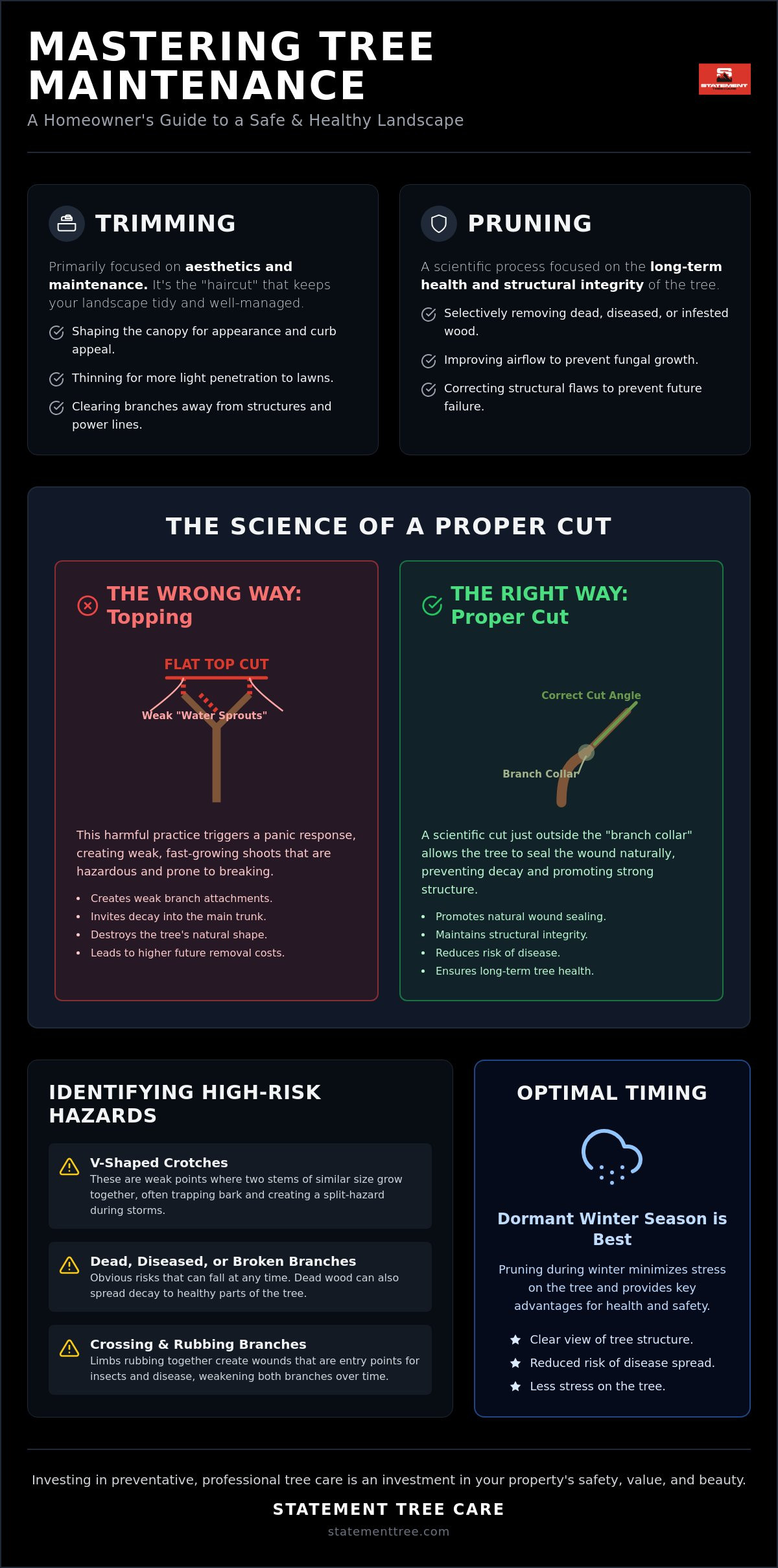
It’s helpful to look at these two tasks as complementary tools in a professional’s kit. Trimming is mostly about the “look” and immediate safety. It involves thinning out the canopy to let more light reach your lawn or clearing branches away from power lines and siding. It’s the haircut that keeps everything tidy and within its proper boundaries.
Pruning is about the “life” and long-term biological health of the tree. This process involves selectively removing diseased, dead, or infested wood. By cutting away the bad parts, we stop decay from spreading to the trunk. When these services work together, they create a balanced, safe canopy that lives longer and looks better. You get the aesthetic beauty of a well-shaped tree along with the peace of mind that comes from a structurally sound trunk.
Understanding the Science: How Proper Cuts Promote Tree Health
When a tree is cut, it doesn’t heal in the way a human scratch does. Instead, it seals. This biological process, known as compartmentalization, allows the tree to wall off the wound and prevent decay from spreading into the trunk. Understanding the Science: How Proper Cuts Promote Tree Health is essential because every single cut you make has a permanent impact on the tree’s lifespan. Scientific tree trimming and pruning ensures this sealing process happens correctly, keeping the internal structure of your oaks and maples solid for decades.
One mistake we often see in the Twin Cities is “topping.” This involves cutting the top of a tree off to limit its height. It’s a disaster for tree health. Topping triggers a panic response, causing the tree to sprout many thin, vertical shoots called water sprouts. These new branches grow incredibly fast but are weakly attached to the bark. They’re far more likely to snap during a summer storm or heavy winter ice than natural branches. We avoid topping because it creates a hazardous tree that requires more expensive maintenance later.
Strategic thinning of the canopy also plays a massive role in disease prevention. By selectively removing specific branches, we improve airflow throughout the tree. Fungal diseases love stagnant, humid air trapped in thick foliage. Better airflow dries out leaves faster after a rainstorm, which reduces the risk of leaf spot and other common local issues. This also allows more light to penetrate through to your lawn, helping your grass stay green even under a large canopy.
The Anatomy of a Perfect Cut
Making the right cut requires identifying the “branch collar.” This is the slightly swollen area where a limb meets the trunk; think of it as the tree’s shoulder. A proper cut stays just outside this collar. We never perform “flush cuts” that remove the shoulder itself. Doing so destroys the tree’s natural defense system and opens a direct path for rot to enter the main trunk. For large, heavy branches, we use a three-cut method. This involves an initial notch on the underside, a second cut further out to remove the weight, and a final clean cut at the collar to prevent the bark from ripping down the side of the tree.
Disease Management Through Pruning
Pruning also acts as a primary defense against spreading infections. We focus on “The Three Ds” to keep your landscape healthy:
- Dead: Removing dead wood that can attract pests.
- Damaged: Cutting back limbs broken by wind or ice.
- Diseased: Removing infected branches before the problem reaches the roots.
In our area, this is vital for managing Oak Wilt or Dutch Elm Disease. It’s a strict rule in our shop that tools must be sanitized between cuts when working on sensitive species to prevent cross-contamination. If you’re unsure where a branch collar starts or see signs of decay, our team can provide professional tree trimming to keep your canopy safe and healthy.
Timing Your Maintenance: When is the Best Time to Prune?
Timing isn’t just a suggestion; it’s a vital part of tree biology. While you can technically cut a branch any day of the year, choosing the right window for tree trimming and pruning determines how quickly your tree recovers. In the Twin Cities, our seasons dictate the schedule. We generally recommend dormant pruning during the winter months for most species. However, specific Minnesota risks like Oak Wilt mean that certain times of the year are strictly off-limits for cutting into your oaks.
The “no-prune” window for oaks in our area typically runs from April through July. During this time, beetles that carry the Oak Wilt fungus are most active. A single fresh cut can attract these pests and lead to the death of an entire mature tree in just one season. For other species, the rules vary based on when they bloom. If you prune a spring-flowering tree like a Lilac in late winter, you’ll cut off all of this year’s flowers. Safety always comes first, though. If a summer storm leaves a limb hanging over your roof, you shouldn’t wait for winter to call for help.
Dormant Pruning: The Winter Advantage
Winter is the gold standard for structural work. Without a thick canopy of leaves, we can see the entire skeleton of the tree. This visibility makes it much easier to spot crossing branches or structural weaknesses. Since the tree is “asleep,” it loses very little sap when cut, which reduces the overall stress on its system. Sub-zero temperatures also mean that wood-boring insects and fungal spores aren’t active, drastically lowering the risk of infection. Dealing with Tree Trimming for Safety: Identifying Hazards is simply more effective when the structure is fully exposed.
Seasonal Maintenance Calendar
Following a consistent schedule prevents small issues from becoming expensive problems. Here is how we typically break down the year:
- Late Winter: This is the ideal time for most shade trees like Maples and fruit trees. It prepares them for a vigorous burst of growth in the spring.
- Early Spring: Wait until right after the flowers fade for trees that bloom early. This ensures you enjoy the display before shaping the plant.
- Summer: We use this time for light “thinning” or removing those hazardous water sprouts. It’s also the time to clear branches away from windows or power lines.
Every species has its own rhythm. If you aren’t sure where your trees fit on this calendar, it’s best to consult a professional before making the first cut. Proper timing keeps your landscape vibrant and prevents the need for costly emergency interventions later on.
Tree Trimming for Safety: Identifying Hazards and High-Risk Branches
Safety is often the first thing on a homeowner’s mind after a heavy Minnesota windstorm. While a full canopy looks great, hidden structural flaws can turn a beautiful tree into a liability. One of the most common issues we spot is a “V-shaped” crotch. This occurs when two large stems grow close together at a narrow angle. These joints are weak and prone to splitting down the middle under the weight of ice or high winds. Catching these early through strategic tree trimming for safety can save the tree and your property from significant damage.
You should also watch out for “lion-tailing.” This happens when an inexperienced cutter removes too many interior branches, leaving only a tuft of leaves at the end of a long, bare limb. This shifts the weight to the very tip, making the branch much more likely to snap during a storm. We also look for deadwood, especially limbs hanging over driveways, pools, or power lines. If a tree has lost more than 50% of its canopy or has a hollow trunk, it might be time to move from maintenance to professional tree removal. Homeowners planning a construction project should also be aware that tree removal for new construction involves its own set of local permits and regulations that go well beyond standard maintenance decisions.
The “Ladder and Chainsaw” Rule: When to Call a Pro
We always tell our neighbors in Minnetonka and Chanhassen to follow the shoulder-height rule. If you can’t reach a branch from the ground, it’s time to put the tools down. Working on a ladder with a chainsaw is one of the most dangerous DIY tasks you can attempt. Professional teams use bucket trucks and specialized cranes to handle heavy limbs safely. Beyond the physical risk, there’s the liability factor. We are fully insured, which protects you from the financial fallout of an accident. A DIY mistake can cost far more than a professional service call.
Clearing Obstructions and Power Lines
Trees that grow too close to your home create more than just noise. Branches scraping against your roof or siding can strip away shingles and trap moisture, leading to mold growth and expensive repairs. We also ensure your landscape doesn’t block street lights or traffic signals, which is vital for neighborhood safety. The most critical danger involves utility lines. Never attempt to trim a tree near a power line yourself. High-voltage lines can arc through the air, and even a wooden ladder can conduct electricity.
If you’ve spotted a leaning limb or a dead branch hanging over your house, we can help. You can request a quote for tree trimming and pruning to secure your yard and get peace of mind before the next storm hits. If you’re in Minneapolis and have received a city notice about a condemned or dangerous tree, our guide to hazardous tree trimming in Minneapolis will walk you through the 2026 inspection process, city compliance deadlines, and how to avoid costly special assessments on your property taxes. After a major trimming session, homeowners dealing with a large volume of branches and brush may also want to explore a dumpster for yard waste rental to efficiently clear all the debris from their property without multiple trips to the curb.
Professional Tree Care in the Twin Cities: The Statement Tree Care Difference
Choosing a partner for tree trimming and pruning is about more than just finding someone with a saw. It’s about finding a team that understands the local ecosystem and the specific challenges of Minnesota weather. At Statement Tree Care, we’ve spent over 20 years as a family-owned and operated business serving Minnetonka and Chanhassen. We don’t just see ourselves as contractors; we’re your neighbors. This local perspective allows us to provide preventative advice that’s tailored to our specific climate, from preparing for heavy ice loads to managing regional disease cycles.
One of the biggest complaints we hear about the industry is the lack of transparency. Some companies offer a low initial price but then add “disposal fees” or “equipment surcharges” once the work is done. We do things differently. Our commitment to upfront pricing means the quote you receive is the price you pay. There are no hidden surprises at the end of the job. We also believe that a job isn’t finished until your property looks better than when we arrived. Our clean-up guarantee is a central part of our family values; we treat your yard with the same respect we’d give our own.
What to Expect During Your Consultation
Every project starts with a clear, honest assessment. During our free estimates, we walk your entire property with you to identify potential health risks and safety hazards. We don’t believe in high-pressure sales. Instead, we focus on transparent communication. We’ll explain exactly which cuts are necessary for the long-term health of your canopy and which ones can wait. Whether you need single-tree pruning or full lot clearing, we build a customized plan that fits your specific goals and budget. If you’re preparing a site for building, understanding the complexities of tree removal for new construction in the Twin Cities can help you avoid costly permit violations and protect high-value trees before the first shovel hits the ground. Our goal is to give you the information you need to make the best decision for your landscape.
The Peace of Mind of a Fully Insured Team
Safety is our top priority, but we also prepare for the unexpected. Working with a fully insured team protects your home and our crew from any potential accidents. This coverage is a “safe hand” for homeowners, ensuring that you aren’t held liable for mishaps on your property. We take this responsibility seriously. By combining professional-grade equipment with decades of hands-on experience, we minimize risks while delivering high-quality results. If you’re ready to protect your trees, request your free quote today. We’re here to help your landscape thrive for the next 20 years and beyond.
Secure Your Landscape for the Seasons Ahead
Your trees are more than just part of the scenery; they’re a vital part of your home’s safety and value. By understanding the science of proper cuts and the importance of seasonal timing, you can prevent many common hazards before they ever start. Remember that professional tree trimming and pruning isn’t just about aesthetics. It’s a preventative investment in the long-term structural integrity of your landscape. Whether you’re worried about a leaning oak after a storm or simply want to clear a view, the right care today prevents the high costs of emergency removals tomorrow.
We’re ready to help you keep your property beautiful and safe. With over 20 years of local experience in the Twin Cities, our family-owned team provides fully insured work with upfront pricing you can trust. We even include a clean-up guarantee to ensure your yard looks pristine when we’re done. You deserve a yard that thrives without the stress of falling branches or hidden fees.
Get a Free Tree Trimming Quote from Our Family-Owned Team
Let’s work together to keep your trees healthy and your home protected for years to come.
Frequently Asked Questions
How often should my trees be trimmed or pruned?
Most mature trees benefit from a professional checkup every three to five years. Younger trees often need more frequent attention to establish a strong structural foundation. The specific frequency depends on the species and how quickly it grows in our local climate. Regular inspections help us catch small issues before they turn into expensive safety hazards or require emergency removal.
Is tree trimming different from tree pruning?
Yes, they serve different purposes for your landscape. Tree trimming and pruning are often performed together, but trimming focuses on the outer shape and clearing space around power lines or roofs. Pruning is a health focused practice where we selectively remove diseased or dead wood to protect the tree’s internal system. Both are essential for maintaining a safe and balanced canopy.
Can I trim my own trees if I have a chainsaw?
We strongly recommend only trimming branches you can reach comfortably while standing on the ground. Working on a ladder with power tools is incredibly dangerous and is a leading cause of serious home accidents. Our professional team has the insurance, safety gear, and specialized bucket trucks to handle high limbs without risking your safety or your property.
How much does professional tree trimming cost in the Minneapolis area?
The cost depends on several factors, including the tree’s size, its health, and its proximity to structures like your home or power lines. A large oak overhanging a sunroom requires more time and specialized equipment than a small maple in an open field. We provide upfront pricing and free estimates so you’ll know the exact cost before we make the first cut.
Will trimming my tree help it grow faster?
Trimming doesn’t technically increase the speed of growth, but it does make the tree grow stronger. By removing weak or competing branches, the tree can direct its nutrients and energy toward its healthiest limbs. This results in a more resilient structure that can better withstand heavy Minnesota snow and ice loads.
What happens if I don’t trim the dead branches off my tree?
Leaving dead wood creates a major safety risk for your family and your neighbors. These branches eventually rot and fall, usually during high winds or storms. Dead limbs also act as an entry point for pests and fungal diseases. If left alone, decay can spread from a single branch into the heartwood of the trunk, eventually killing the entire tree.
In the event that a falling limb causes significant damage to an older vehicle in your driveway, you can visit Cash For Junk Cars Michigan to learn how to turn that junk car into cash.
Is it safe to prune trees in the middle of summer?
It depends entirely on the species. We generally avoid pruning oaks and elms during the summer months to prevent the spread of Oak Wilt and Dutch Elm Disease. However, summer is a fine time for light thinning or removing hazardous branches on many other species. Minneapolis homeowners who have received a city compliance notice should review the specific rules around hazardous tree trimming in Minneapolis to understand which species and situations require immediate action regardless of season. We’ll assess your specific trees to determine the safest schedule for maintenance.
Do you provide cleanup and hauling after the trimming is done?
Yes, our clean-up guarantee is a central part of our family values. We don’t just cut branches and leave the mess for you to handle. Our crew hauls away all debris and ensures your yard is tidy before we depart. You won’t have to worry about dragging heavy limbs to the curb or dealing with unexpected disposal fees. For larger projects that generate significant volumes of brush and wood, some homeowners also find it helpful to plan ahead with a yard waste dumpster rental to manage the extra debris on their own timeline.
Protect Your Property Today
Certified arborists serving the Twin Cities metro. Clean, safe, stump-free.
Get a Free Estimate